16.2.6 Academic freedom policy
Academic Freedom Policy
Boğaziçi University, with its policies supporting academic freedom, embraces the freedom to choose research areas, to discuss research publicly and to teach. These principles are regulated by the Higher Education Law No. 2547 and are clearly emphasised in the university's strategic plan. It is one of the fundamental principles of the university that both senior and junior academics have full freedom in research and teaching.
Boğaziçi University's Code of Ethics is based on the creation of an environment where every subject can be freely discussed and the protection of freedom of teaching. These principles ensure that academic autonomy and freedom are exercised in good faith.
Related Links:
- The Law on Higher Education (YÖK)
- Boğaziçi University Strategic Plan 2025-2029
- Boğaziçi University Code of Ethics
- Boğaziçi University Values
- Boğaziçi University Research Page
- BU+ Open Course Events
- BU+ Bosphorus Lectures
‘Rethinking International Law After Gaza’ Conference Held at Boğaziçi University
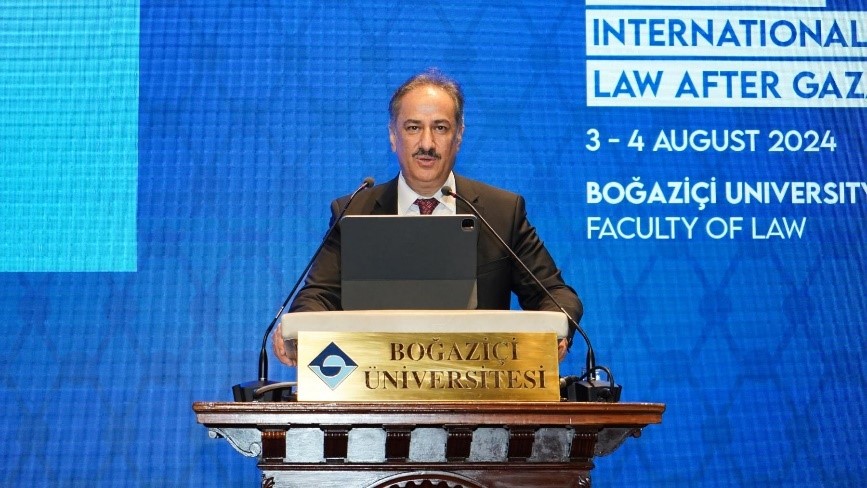
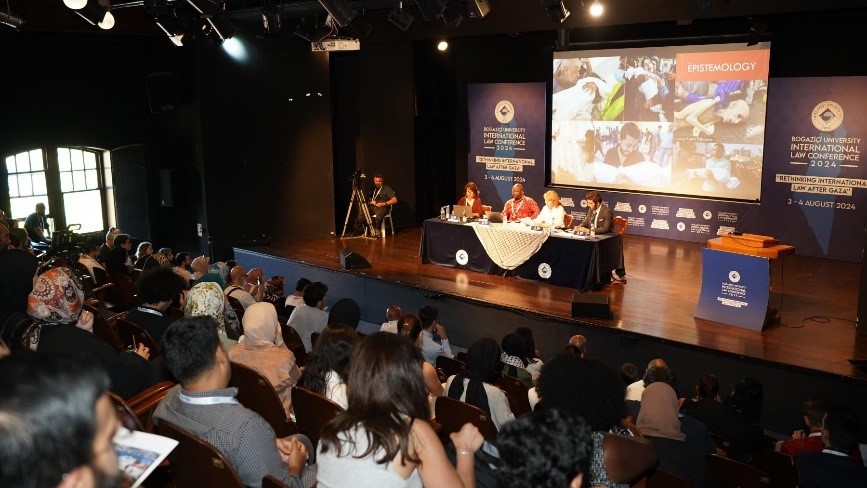
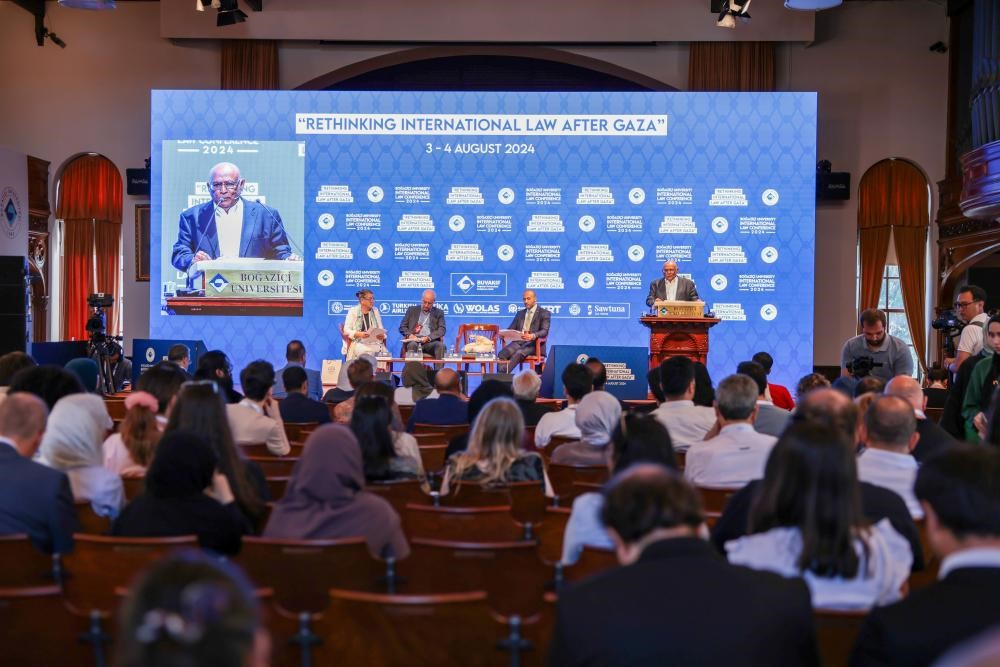
Boğaziçi University Faculty of Law hosted an important event in the field of international law on 3-4 August 2024. The conference, titled ‘Rethinking International Law After Gaza,’ was organised to examine how the humanitarian crisis in Gaza has been addressed from an international law perspective. Over 100 legal experts and academics gathered at the event.
Conference Participants and Content:
- Renowned international experts, including former UN Special Rapporteurs on Palestine Richard Falk and Michael Lynk, and UN Special Rapporteur on the Right to Housing Balakrishnan Rajagopal, served as speakers.
- Rector Prof. Dr. Mehmet Naci İnci emphasised that Boğaziçi University serves as a platform contributing to freedom of expression and critical thinking.
- Associate Dean Assoc. Prof. Dr. Ali Emrah Bozbayındır stated that this conference was one of the most distinguished meetings in its field at both the national and international levels.
Highlights:
- Richard Falk described Israel's actions in Gaza as ‘genocide’ and said that international law had failed to prevent this crisis.
- Michael Lynk stated that Israel's occupation had become completely illegal with the decision of the International Court of Justice. He emphasised that the Global South supports Palestine, but that the main obstacle comes from the countries of the Global North.
- Balakrishnan Rajagopal defined the demolition of homes in Gaza as ‘domicide’ (mass destruction of housing) and argued that it should be recognised as a crime.
The conference called for greater consideration of non-Western perspectives in international law and aimed to initiate a critical dialogue on justice, legitimacy and human rights.
https://haberler.bogazici.edu.tr/tr/news/kampus/2/gazzeden-sonra-uluslararasi-hukuku-yeniden-du/2855
2024 Sustainability Report SDG-16 (Related Section)
Academic Freedom Policy
Boğaziçi University, with its policies supporting academic freedom, embraces the freedom to choose research areas, to discuss research in the public sphere, and to give lectures. These principles are regulated within the framework of the Higher Education Law No. 2547 and clearly emphasised in the university's 2020-2024 Strategic Plan. It is a fundamental principle of the university that both senior and junior academics have full freedom in research and teaching.
Institutional Framework of Academic Freedom
- Ethical Principles and Academic Freedom:
According to theEthical Principles of Boğaziçi University, it is essential to create an environment within the university where all issues can be freely discussed and to protect the freedom of teaching and learning. One of the fundamental principles is the exercise of authority within the framework of academic autonomy, freedom and goodwill.
Click here to read Boğaziçi University Code of Ethics:
https://bogazici.edu.tr/tr/pages/etik-ilkeler-ve-degerler/188
Strategic Planning:
As stated inthe Boğaziçi University 2020-2024 Strategic Plan, the values of Boğaziçi University throughout its history have been based on implementing and developing the autonomous, libertarian, democratic, participatory and transparent university model in all academic processes. This model includes the goal of raising individuals who can think creatively and critically, who are rooted in the local and open to the universe.
Click here to read Boğaziçi University 2020-2024 Strategic Plan:
https://bogazici.edu.tr/Assets/Documents/Dosyalar/BU_stratejik_plan_2020_2024_29112020.pdf
Boğaziçi University's policies on academic freedom ensure the continuity of an academic environment that is compatible with local and universal values, encourages free thought and supports scientific progress.
Peace justice and strong institutions
Promote peace and inclusive societies for sustainable development, provide access to justice for all and build effective, accountable and inclusive institutions at all levels.