10.6.3 Access to university underrepresented groups recruit
Boğaziçi University implements planned actions to promote diversity and inclusion in student admissions and staff recruitment. The University offers a variety of programmes and policies to support the application and admission of underrepresented groups such as individuals with disabilities, ethnic minorities, low-income students, women, non-traditional students and refugees.
Student Admissions and Recruitment Policies
Boğaziçi University is a higher education institution in Turkey that admits students through centralised examinations. This central examination system is designed to minimise discrimination. The university's student admission policies are based on transparent and objective criteria. Graduate admissions are based on various criteria such as interviews, reference letters and standardised test scores.
Students and Staff with Disabilities
Boğaziçi University Disabled Students Counselling and Coordination Unit provides support services to reduce the difficulties faced by disabled students and staff in university life. This unit works to increase the physical accessibility of the campus and to ensure that individuals with disabilities can participate equally in education and business life.
Part-time Student Employment
Boğaziçi University contributes to the economic support of students from underrepresented groups by providing part-time work opportunities for them. Part-time work opportunities are offered to students in various units, allowing them to gain experience within the university. Priority is given to students who are eligible for scholarships, and more flexible application conditions are provided for students who have been damaged by natural disasters such as earthquakes and floods, children of martyrs and veterans, and students with disabilities.
Action Plans and Monitoring
The University regularly collects and analyses data to measure and monitor applications and admissions of underrepresented groups. This data is included in the university's annual activity reports and helps identify strategic goals to increase diversity.
Boğaziçi University in Numbers 2023
2023-2024 Academic Year Scholarship Report
2024 Boğaziçi University Administrative Activity Report
Boğaziçi University actively works to increase diversity in student, staff and faculty recruitment and to provide an inclusive environment and implements transparent policies in this regard. The University's commitment in this regard reflects its aim to provide an educational and working environment based on equal opportunities that support academic and professional achievements.
2024 Sustainability Report SDG-10 (Related Section)
Planned Actions for the Inclusion of Underrepresented Groups at the University
Boğaziçi University takes planned actions to promote diversity and inclusion in student admissions and staff recruitment processes. Various policies and practices are in place to support applications and admissions of underrepresented groups such as persons with disabilities, ethnic minorities, low-income students, women, non-traditional students and refugees.
A Barrier-Free and Discrimination-Sensitive Educational Environment
Boğaziçi University is committed to providing an accessible environment free from discrimination to support the academic and social lives of students with disabilities. The policy pursued for students with disabilities to prefer Boğaziçi University is supported by the following practices:
1. Accessibility: An academic and social environment where students will not be discriminated against because of their physical, cognitive or mental differences is provided.
2. Individual Support: Individual support is provided by GETEM (Technology and Education Laboratory for the Visually Impaired) and the Disabled Student Unit from the moment students with disabilities are admitted to the university until their graduation.
3. Dormitory and Scholarship Opportunities: Facilities are provided in dormitory and scholarship processes.
4. Course and Exam Adaptations: Individual adaptations are made to students in courses and exams according to the type of disability.
5. Support for Visually Impaired Students:
- Course materials are presented electronically or in Braille format upon request.
- Shapes and graphic materials are made tactile.
- Supports such as independent movement and computer training are provided.
6. Special Arrangements for Physically Disabled Students:
- Dormitory rooms are allocated according to the disability.
- On-campus transport is supported.
- Classes are held in classrooms accessible by lift.
7. Special Adaptations for the Hearing Impaired: Adaptations are made such as providing note-taker support to students in classes.
8. Support for Students with Neurodiversity: Adaptations are provided in the library, lecture and exam environments in accordance with their needs.
9. Student Assistant Support: Students with disabilities are entitled to part-time student support for at least 8 hours per week.
10. Psychosocial Support: Necessary guidance is provided by specialists for students who need psychosocial support.
11. Inclusion in Decision-Making Mechanisms: Our university has a disabled student representation in order to ensure the participation of disabled students in decision-making processes in accordance with their needs.
12. Job and Internship Opportunities: Students are immediately informed about job and internship opportunities.
13. Accessible Facilities: In order to ensure that the dining hall, gymnasium, cafeteria and other campus areas are accessible, continuous co-operation is made with all units.
14. Highly Aware Environment: Living with disability at the university, with the help of sign language and similar courses, provides a more prejudice-free and highly aware environment.
Boğaziçi University aims to provide an educational experience where every student has equal opportunities through its anti-discrimination policies and individual support systems.
Click here to go to the page of the Disabled Students Counselling and Coordination Unit:
https://engelliler.bogazici.edu.tr/
Scholarship Opportunities for Students with Economic Needs
Boğaziçi University supports the education of students with financial need by providing scholarships at undergraduate and graduate level.
Scholarship Applications
- At the beginning of each academic year, students are evaluated according to their academic performance and socio-economic status.
Scholarship Amount and Types
- It is determined by the Scholarship Commission every year.
- Needs scholarships consist of in-kind support covering food, books, dormitory and summer term course fees and cash scholarships.
- Special arrangements are made for disabled students and they are allowed to benefit from more than one cash scholarship.
Duration and Continuation Conditions
- Scholarships continue throughout the normal duration of undergraduate education, provided that the GPA of the students does not fall below 2. Exchange Programmes
- The scholarships of students attending other universities within the scope of Boğaziçi University's exchange programmes are protected under certain conditions.
- This programme reflects the university's social responsibility to ensure equal access to education for students with economic need and to support their academic success.
Undergraduate requirement scholarship application guide:
Graduate requirement scholarship application guide:
Part-Time Work Opportunities for Underrepresented Students
Boğaziçi University offers part-time work opportunities to support the academic and social lives of students from underrepresented groups. These opportunities both provide financial support to students and contribute to their gaining work experience.
Priority Recognised Groups:
Scholarship Students: Higher Education Credit and Dormitories Institution scholarship holders or students who are eligible for scholarships are prioritised. Students with Disabilities and Disaster Victims:
- Students who certify that they have been affected by natural disasters such as earthquakes, floods, fires or are the children of martyrs / veterans, and disabled students (within 3% quota) have the right to work with priority.
- For these students, conditions other than studying within the normal education period, not being a foreign student and not being disciplined are not sought.
Working Conditions:
- Within the scope of part-time work, students are temporarily employed on certain days and hours of the week (maximum 15 hours) in accordance with their course programmes.
- A ‘Part-Time Student Employment Agreement’ is signed between the students and the Rectorate.
- Part-time students are protected by occupational accident and occupational disease insurance within the scope of the ‘Social Insurance and General Health Insurance Law ’ numbered 5510.
Students with disabilities can apply to the Disabled Students Counselling and Coordination Unitto benefit from part-time working opportunities and participate in the application process by following the part-time job announcements of the university.
For more information about part-time work, please click here:
https://ogrenciler.bogazici.edu.tr/Home/SubPage/kismizamanli
Recruitment Policies for Underrepresented Staff
Law No. 657 ‘Civil Servants Law’ contains regulations for the employment of disabled personnel, and these regulations are also applied in the recruitment processes of Boğaziçi University. These regulations can be summarised under the following headings:
Disabled Employment Ratio: Institutions and organisations are obliged to employ 3% of their staff with disabilities. This rate is calculated over the total number of filled positions.
Disabled Civil Servant Appointments:
- Exams for disabled people are held at a different time than general civil servant recruitment exams.
- Exam questions are prepared in accordance with their disability groups and educational status.
- Exams are held centrally by ensuring their accessibility.
Follow-up and Audit: The supervision of the obligation to employ disabled personnel and the placement of disabled people in civil service is carried out by the State Personnel Directorate.
Notification of Requests: Public institutions and organisations are obliged to notify the State Personnel Presidency until the end of October every year about the vacancies and needs of disabled people.
Placement Procedures: The State Personnel Presidency makes placements to the disabled quotas in line with the demands notified by the institutions.
Procedures and Principles: Issues such as the conditions of recruitment of disabled people to the civil service, central examination and placement processes, placements to be made by lot taking into account the educational status and disability groups, and the supply of tools and equipment needed by the disabled people while carrying out their duties are regulated by the regulation prepared by the State Personnel Presidency.
Statistical Data: Public institutions and organisations are obliged to report statistical data on the employment of disabled personnel to the State Personnel Presidency.
Determination of Daily Working Hours:
- The starting and ending times of daily work and lunch rest periods may be determined differently by the senior manager in the centre and by the local authorities in the provinces, taking into account the disability status, service requirements, climate and transportation conditions for the disabled.
- Disabled civil servants cannot be assigned night watch and night shift duty against their will.
Law No. 657 on Civil Servants:
https://www.mevzuat.gov.tr/MevzuatMetin/1.5.657.pdf
Monitoring of Action Plans
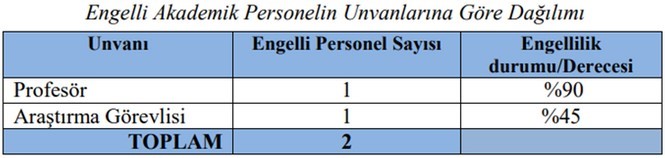
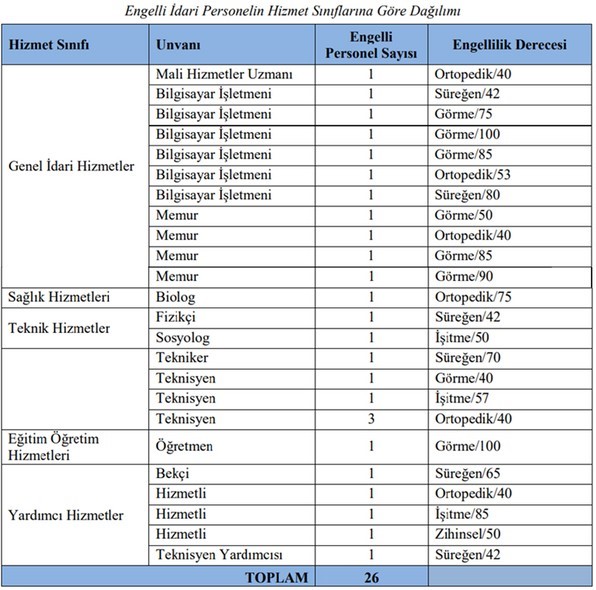
Boğaziçi University regularly conducts data collection and analyses to evaluate the application and admission processes of students, staff and faculty from underrepresented groups. These data are shared in the university's annual activity reports and contribute to the determination of strategic goals to increase diversity and create an inclusive education and working environment.
Boğaziçi University 2023 Administrative Activity Report:
Boğaziçi University in Numbers 2023:
Anti-Discrimination and Anti-Harassment Policies
Boğaziçi University is committed to creating an inclusive and safe campus environment and develops anti-discrimination and anti-harassment policies. These policies are designed to provide an environment where all students, staff and academic staff have equal rights and to prevent any form of discrimination, harassment or ill-treatment. The University's approach to this issue has been shaped in line with national legislation and international human rights standards and is implemented with the aim of continuous improvement.
Boğaziçi University Code of Ethics
Boğaziçi University defines ethical principles for faculty members, students, faculty members with administrative duties and administrative staff, which are adopted and adhered to in areas not covered or determined by laws and regulations. According to this, at Boğaziçi University;
- Respect for human rights and freedoms,
- Acting fairly and honestly without discrimination and prejudice based on religion, language, race, ethnic origin, opinion, gender, sexual orientation, age, physical disability and similar characteristics,
- Protection of freedom of information, information, learning and teaching,
- Keeping the relations between individuals and units within the university always within the framework of mutual respect,
- Supporting and encouraging individual development and respecting academic merit, experience and effort are ESSENTIAL.
These principles reflect Boğaziçi University's understanding of commitment to ethical values and its commitment to creating an environment of equality, respect and freedom on campus.
Click here to read the full Boğaziçi University Code of Ethics:
https://bogazici.edu.tr/tr-TR/Content/Genel/Etik_Ilkeler
Boğaziçi University Gender Equality Plan (2023)
Boğaziçi University aims to ensure gender equality in its entire institutional structure with the Gender Equality Plan prepared in 2023. The plan is shaped under five main headings:
1) Recruitment and career development,
2) Mechanisms to combat sexual harassment and discrimination, 3) Equality in research and teaching, 4) Work-life balance, 5) Institutionalisation for gender equality. Under these headings, short and long-term goals have been set and concrete steps and strategies to be implemented to achieve these goals have been planned. The University is committed to raising awareness, developing policies and establishing effective monitoring mechanisms in order to promote equality and realise it in a sustainable manner. In this context, ensuring equality in academic and administrative structures, developing strong support mechanisms in combating sexual harassment and discrimination, and observing work-life balance have been identified as priority areas.


Click here to read Boğaziçi University's Gender Equality Plan:
Sexual Harassment Prevention Policies
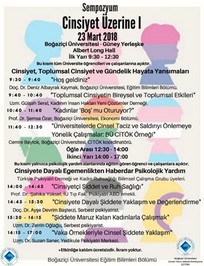
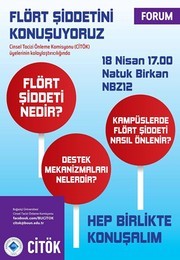
Boğaziçi University took a firm stance against sexual harassment and discrimination and established the Commission for the Prevention of Sexual Harassment (CİTÖK ) in 2012. The Commission carries out activities for all members of the university in the following areas:
- To organise awareness-raising training programmes to prevent sexual harassment and violence at the university,
- Developing policies and action plans to combat sexual harassment and violence,
- To evaluate the requests of individuals who have been subjected to sexual harassment through the CİTÖK Office and to provide support to these individuals in medical, psychological, psychosocial and legal matters in accordance with the principle of confidentiality.
CİTÖK plays a critical role in raising awareness and providing a safe environment in combating sexual harassment and discrimination on campus.
Click here to visit CITÖK's web page:
https://citok.bogazici.edu.tr/tr

Education Policies
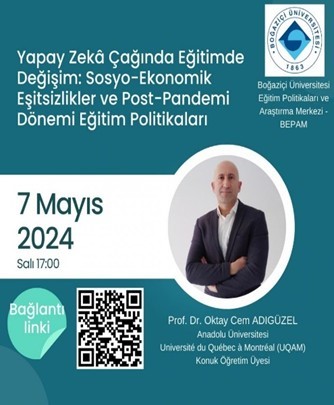
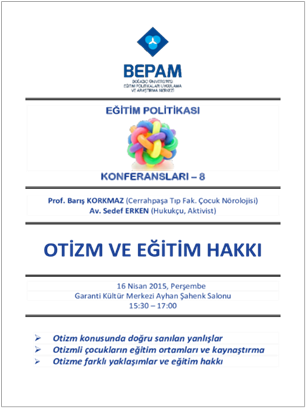
Boğaziçi University Education Policy Research and Application Centre ( BEPAM) conducts theoretical, applied and comparative research in the field of educational sciences in collaboration with other social sciences. Based on the results of the research, it proposes policies for the education system and educational institutions.
Main Areas of Activity:
- Publishing and translating in the field of educational sciences and policies
- To cooperate with national and international organisations and to carry out implementation and development projects in the field of educational sciences
- To ensure coordination between Turkey's education agenda and the global education agenda
- To evaluate the political and practical developments in Turkey and the world on an academic basis by considering education as a universal right
BEPAM, which aims to develop applicable policies from research outputs and to present these policies for the general benefit of the society, is a research institution that guides national and international education policies.
Education Policies
Click here to visit BEPAM web page:
https://bepam.bogazici.edu.tr/
Social Policy and Equality Studies
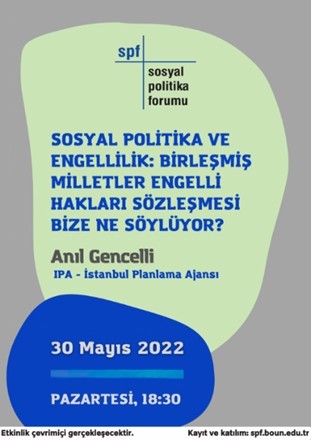
Social Policy Forum is a research centre established to conduct scientific research in the field of social policy and to contribute to social policy making processes. The Forum's approach to social policy issues is centred on human rights. The approach adopted in research activities is an approach that evaluates social policy processes together with their historical, economic, political and social dimensions.
Priority Areas of Work:
1. Social inequalities, poverty and social exclusion;
2. Developments in health, education, social care and other social services;
3. Developments and regulations in working life, unemployment, labour relations, the role of trade unions;
4. Pension systems, income support programmes and the functioning of social assistance mechanisms;
5. Housing and shelter policies, public transport policies;
6. The interaction between social actors and political processes in the field of social policy;
7. The impact of global and local political dynamics, international organisations, civil society organisations, humanitarian aid organisations and philanthropic organisations on social policy;
8. Analysing social policies in terms of human rights-based approaches such as gender equality, disability rights, children's rights.
The Forum aims to hold meetings with representatives of international organisations, especially United Nations agencies, politicians, bureaucrats, newspaper columnists and other opinion leaders who play a role in social policy decisions and practices, to share research results and thus contribute to policy processes.
Click here to visit the Social Policy Forum web page:
https://spf.bogazici.edu.tr/tr
National Legislation
In the‘Turkish Penal Code (TCK) “No. 5237 and the ”Higher Education Law’ No. 2547, acts such as discrimination, sexual harassment, sexual assault, threat, blackmail and coercion are defined as offences and the penalties for these acts are clearly stated.
Sexual harassment according to the Turkish Penal Code (Article 105):
- A person who sexually harasses another person shall, upon the complaint of the victim, be punished with imprisonment from three months to two years or with a judicial fine.
- If the offence is committed by taking advantage of the convenience provided by public office or service relationship or family relationship or by taking advantage of the convenience provided by working in the same workplace, the penalty to be imposed according to the above paragraph shall be increased by half.
- If the victim had to quit his/her job, leave school or his/her family due to this act, the penalty to be imposed shall not be less than one year.
Sexual Assault according to the Turkish Penal Code (Article 102/1):
- A person who violates the bodily inviolability of a person by sexual behaviour shall be sentenced to imprisonment from five to ten years upon the complaint of the victim.
- If the sexual behaviour remains at the level of molestation, imprisonment from two to five years shall be imposed.
- If the offence is committed by abusing the influence provided by public office, guardianship or service relationship, the penalties given according to the above paragraphs are increased by half.
Qualified Sexual Assault according to the TPC (Article 102/2):
- If the offence is committed by inserting an organ or other object into the body, imprisonment of not less than twelve years shall be imposed.
- If the offence is committed by abusing the influence provided by public office, guardianship or service relationship, the penalties given according to the above paragraphs are increased by half.
Threat according to the TPC (Article 106):
- A person who threatens another person with the bet that he/she will commit an attack on his/her life or the life, body or sexual inviolability of himself/herself or his/her relatives shall be sentenced to imprisonment from six months to two years.
- If this offence is committed against a woman, the lower limit of the penalty shall not be less than nine months.
Blackmail according to the TPC (Article 107):
- A person who forces a person to do or not to do something against the law or to do something that he/she is not obliged to do or not to do, or to obtain an unfair advantage, under the pretence that he/she will do or not do something that he/she is entitled or obliged to do, shall be sentenced to imprisonment from one year to three years and a judicial fine up to five thousand days.
According to the Turkish Penal Code, Force (Article 108):
- If force is used against a person to force him/her to do or not to do something or to allow him/her to do something, the penalty to be imposed for the offence of intentional injury shall be increased by one third to one half.
Deprivation of Liberty according to the TPC (Article 109):
- A person who unlawfully deprives a person of his/her liberty to go to a place or stay in a place shall be sentenced to imprisonment from one year to five years.
- If a person uses force, threat or deception to commit the act or during the commission of the act, he/she shall be sentenced to imprisonment from two to seven years.
Turkish Penal Code:
https://www.mevzuat.gov.tr/mevzuatmetin/1.5.5237.pdf
According tothe Higher Education Law, General Principles, Article 53;
Printing, reproducing, distributing or displaying leaflets, posters, banners, banners, bands, tapes and the like, or hanging them anywhere in an institution, which are intended to incite violence or hatred in terms of their content, is punishable by reprimand,
- Discrimination based on language, race, colour, sex, political opinion, philosophical belief, religion and sect in the performance of the duty, acting against the requirements of the duty and behaving in a manner that targets the benefit or harm of individuals is punishable by suspension of progression or more than one pay cut ,
- Insulting or threatening his/her supervisor, subordinates, colleagues or beneficiaries of the service is punishable by suspension of progression or multiple pay cuts ,
- Actual assault or sexual harassment of supervisors, colleagues, staff, service beneficiaries or students requires dismissal from public office.
According to the Higher Education Law, Disciplinary Acts of Students, Article 54;
- Acting in a way that hinders the freedom of learning and teaching or disrupting the peace and order of higher education institutions,
- To make verbal or written actions that damage the honour and dignity of individuals in the higher education institution,
- Threatening the staff or students of the higher education institution is punishable by suspension from the higher education institution from one week to one month,
- Actually attacking the staff or students of the institution Suspension from the higher education institution for one semester,
- Obstructing the performance of duty by using force and violence against higher education institution officials,
- Preventing students from benefiting from higher education services by using force and violence against them,
- Sexual harassment in higher education institutions is punishable by suspension from the higher education institution for two semesters,
- Violating the sexual inviolability of persons by engaging in sexual behaviour on their body requires the penalty of dismissal from the higher education institution.
Higher Education Law:
Reduced inequalities
Reduce inequality within and among countries.